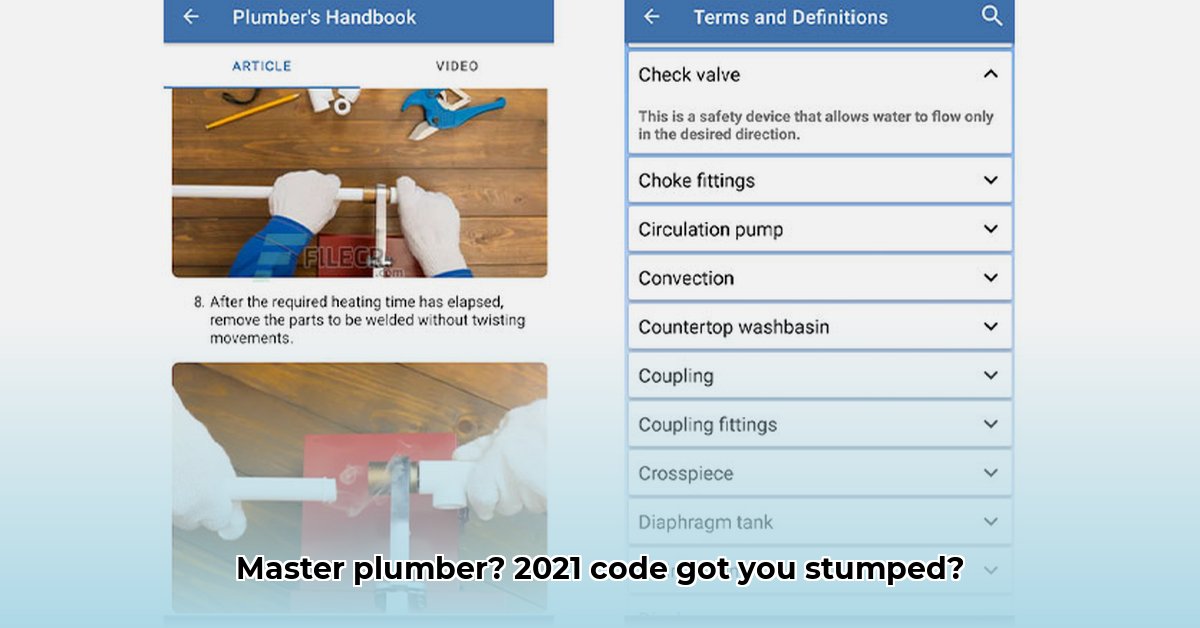
Plumbing codes are complex and constantly evolving. Mastering them is crucial for successful and safe plumbing installations. This guide provides a step-by-step approach to using the Master Plumber's Handbook, 6th edition, to ensure compliance with the 2021 Uniform Plumbing Code (UPC) and International Plumbing Code (IPC). Understanding and applying these codes is essential for avoiding costly mistakes and ensuring the safety of your projects.
Utilizing the Plumber's Handbook for Code Compliance
The Master Plumber's Handbook, 6th edition, is a comprehensive resource for plumbing professionals. It's designed to simplify the often-confusing world of plumbing codes, providing clear explanations and practical guidance. However, maximizing its effectiveness requires a structured approach.
A Step-by-Step Guide to Code Compliance Using the Handbook
Successfully navigating plumbing codes involves more than just reading the handbook; it necessitates a methodical approach. Follow these six steps to ensure full compliance:
Identify the Relevant Code Section: Begin by precisely identifying the relevant sections of the UPC and IPC within the Handbook that pertain to your specific plumbing project. This ensures you're working with the correct specifications and regulations.
Thorough Code Interpretation: Carefully read and interpret the selected code sections. Pay close attention to details, terminology, and any specific requirements or exceptions. Don't skip sections; thorough understanding is paramount.
Visual Verification: Utilize the diagrams and illustrations included in the Handbook. These visual aids often clarify complex concepts and provide a practical understanding of installation requirements.
Local Code Verification: Contact your local building department to confirm that there are no local ordinances or amendments to the UPC or IPC that might impact your project. Local regulations often supersede national codes.
Meticulous Documentation: Maintain detailed records of your work, including references to the specific code sections from the Handbook that guided your decisions. This documentation serves as critical evidence of compliance. This is vital for protecting yourself from disputes.
Continuous Updates: Plumbing codes are updated regularly. Stay informed about any revisions or amendments by accessing the official UPC and IPC websites (1) and ensuring that you're working with the latest edition of the Handbook.
Strengths and Limitations of the Plumber's Handbook
While the Handbook offers invaluable guidance, it’s important to understand its limitations:
Advantages:
- Comprehensive Coverage: The Handbook covers both the UPC and IPC, ensuring broad code compliance.
- Clarity and Practicality: The information is presented in a clear, concise, and easy-to-understand manner.
- Invaluable Resource: It's a crucial tool for both experienced and novice plumbers.
Disadvantages:
- Lack of Online Support: It does not offer online supplemental resources or interactive learning tools.
- Periodic Updates Required: Staying fully compliant necessitates purchasing updates as codes evolve.
Supplementing the Handbook with Online Resources
While the Handbook forms an essential foundation, online resources significantly supplement its value:
Expanding Your Knowledge Base
The handbook provides a solid foundation, but staying abreast of code changes and best practices requires using online resources to maximize compliance. How often do you update your knowledge? Official code websites are regularly updated, offering the most current information.
Essential Online Resources:
Official Code Websites: Regularly check the websites of the International Association of Plumbing and Mechanical Officials (IAPMO) (1) and other relevant organizations for updates to the UPC and IPC.
Manufacturer Websites: Consult manufacturer websites for installation instructions and compliance certifications for specific plumbing products. This is crucial for ensuring proper and code-compliant installations.
Online Forums and Communities: Engage with online communities of plumbing professionals to share knowledge, troubleshoot issues, and access diverse perspectives on code interpretation.
A Practical Approach to Using Online Resources
- Identify Knowledge Gaps: Pinpoint areas where you need clarification or further information.
- Targeted Research: Use precise keywords to search relevant websites and resources.
- Information Validation: Cross-reference information from multiple sources to ensure accuracy.
- Organized Resource Management: Create a system for storing and accessing your online resources.
- Regular Updates: Consistently check for updates to codes and online resources.
Advantages and Disadvantages of Online Resources
| Feature | Advantages | Disadvantages |
|---|---|---|
| Up-to-Date Information | Access to the latest code changes and interpretations. | Requires vigilance to ensure you are using the most current data. |
| Diverse Perspectives | Exposure to various viewpoints and experiences. | Can present conflicting interpretations, requiring careful evaluation. |
| Interactive Learning | Opportunities for visual learning and interactive exercises. | Requires internet access and digital literacy. |
| Community Support | Access to a network of professionals for assistance and support. | Potential for misinformation if not carefully vetted. |
By combining the Master Plumber's Handbook with a commitment to using verified online resources, plumbers can ensure consistently up-to-date and code-compliant installations. This commitment to continuous learning is critical for maintaining professional success and ensuring public safety.
⭐⭐⭐⭐☆ (4.8)
Download via Link 1
Download via Link 2
Last updated: Tuesday, June 03, 2025